

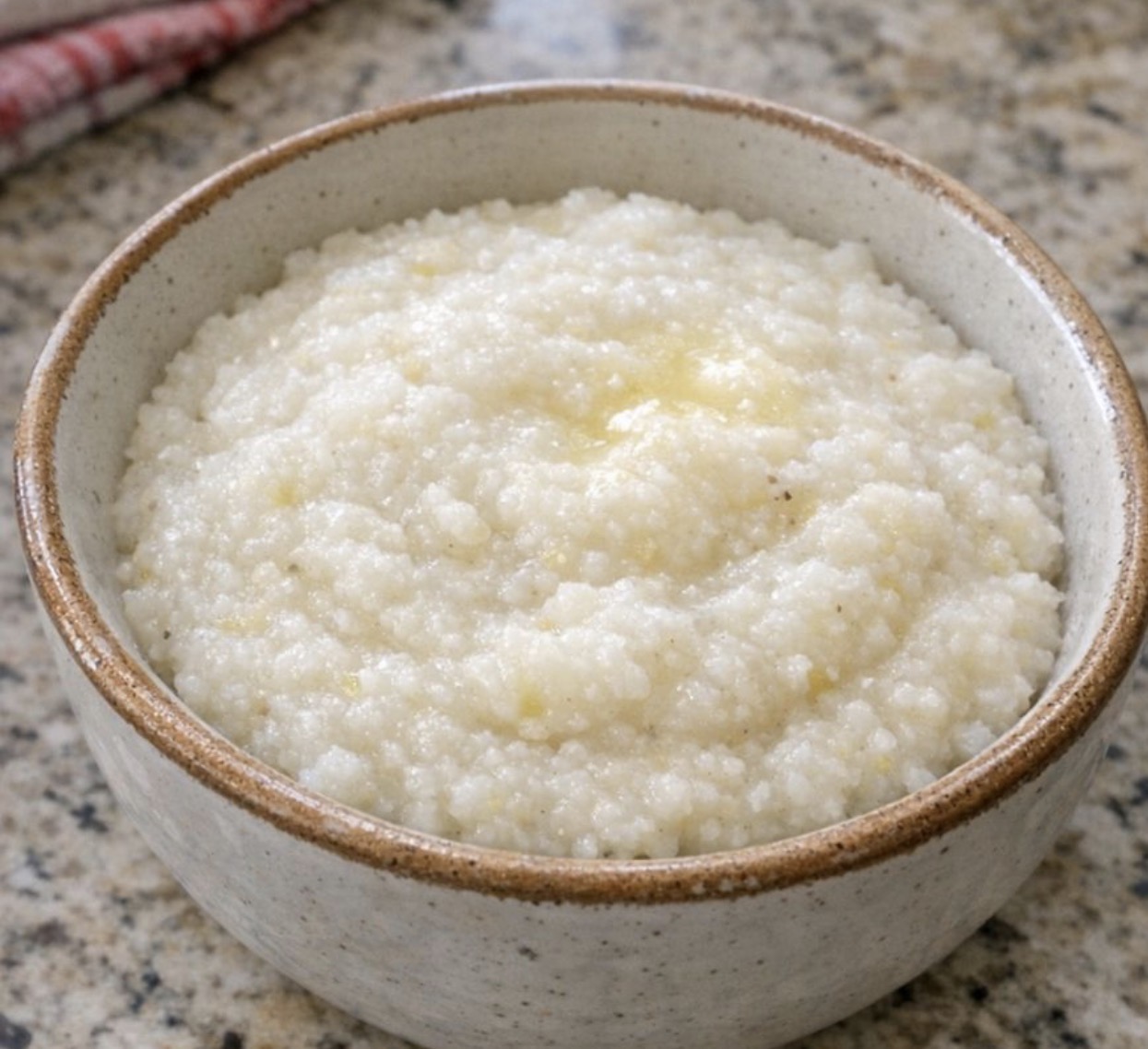
Buttered grits are one of those deceptively simple dishes that tell a big story about American cooking, especially in the South. Grits originated with Indigenous peoples, who ground dried corn into a coarse meal and simmered it into a sustaining porridge. Over time, this humble staple was adopted and adapted across the South, becoming a breakfast classic and a natural partner to everything from eggs to shrimp. This four-ingredient version focuses on pure comfort: creamy, gently salted, and rich with butter. It’s the kind of recipe you make when you want something soothing, inexpensive, and deeply satisfying without a lot of fuss—perfect for weekday breakfasts or as a quiet, grounding side dish at dinner.
These buttered grits are wonderfully versatile on the table. For breakfast, pair them with soft-scrambled eggs, crisp bacon, or sautéed greens for a hearty but balanced plate. At brunch, they sit nicely beside roasted tomatoes or a simple fruit salad to add freshness and acidity. For a more Southern-style dinner, serve the grits under braised greens, blackened fish, or roasted chicken so they can soak up all the flavorful juices. They also make a cozy base for sautéed mushrooms or a vegetable ragout if you’re leaning more plant-forward. Think of them as a creamy, corn-scented canvas that happily supports whatever main or side you’re in the mood for.
Simple Southern 4-Ingredient Buttered Grits
Ingredients
1 cup stone-ground grits (not instant or quick-cooking)
4 cups water (or 3 cups water + 1 cup milk for extra creaminess)
1 teaspoon kosher salt, plus more to taste
3–4 tablespoons unsalted butter, to taste
4 cups water (or 3 cups water + 1 cup milk for extra creaminess)
1 teaspoon kosher salt, plus more to taste
3–4 tablespoons unsalted butter, to taste
Directions
Bring the liquid to a simmer: In a medium saucepan, bring the water (or water and milk combination) and kosher salt to a gentle boil over medium-high heat.
Whisk in the grits: Slowly pour in the grits while whisking constantly. This helps prevent lumps and keeps the texture smooth. Once all the grits are added, continue whisking for another 30–60 seconds.
Reduce heat and cook low and slow: Turn the heat down to low so the mixture is at a bare simmer—just an occasional bubble. Cook uncovered, stirring frequently with a wooden spoon or silicone spatula, scraping the bottom and sides of the pot to prevent sticking. This will take about 20–25 minutes for stone-ground grits, or until the grits are thick, creamy, and tender with just a slight bite.
Adjust texture as needed: If the grits become too thick before they are fully tender, stir in a splash of hot water (or milk) a little at a time until they reach a loose, creamy consistency. They should flow slowly off the spoon, not sit in a solid mound.
Finish with butter: Once the grits are fully cooked and creamy, remove the pan from the heat. Stir in the butter until fully melted and incorporated. Taste and adjust with a pinch more salt if needed.
Serve warm: Spoon the buttered grits into warm bowls and serve immediately. Grits will continue to thicken as they sit, so if they firm up too much, loosen with a bit of hot water or milk and stir before serving.
Variations & Tips
Because this recipe is intentionally simple, it’s also an excellent base to customize. For richer, more luxurious grits, replace 1–2 cups of the water with whole milk or half-and-half, and add an extra tablespoon of butter at the end. If you’d like cheesy grits, stir in 1/2–1 cup of freshly grated sharp cheddar, smoked gouda, or Parmesan off the heat until melted and smooth. To add a little complexity without straying far from tradition, you can simmer the grits in low-sodium chicken or vegetable broth instead of water, then finish with butter as directed. For a smoky note, top the finished grits with crumbled bacon or a drizzle of bacon fat in place of some of the butter. If you’re cooking ahead, know that chilled grits will firm up in the refrigerator; reheat them gently with a splash of water or milk, whisking until creamy again. Finally, if you only have quick-cooking grits on hand, you can still use this method—just shorten the cooking time according to the package instructions and keep a close eye on the texture, as they thicken more quickly and can go from creamy to pasty if overcooked.