

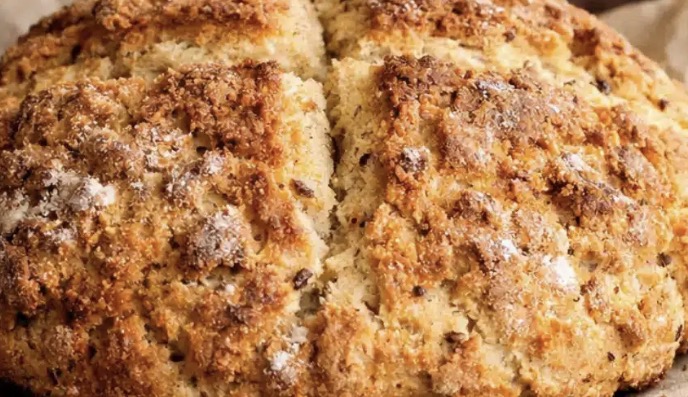
There are some smells that can stop time. For me, one of them is the warm, comforting aroma of freshly baked Irish soda bread drifting through the kitchen. It’s the kind of scent that wraps around you like a wool cardigan on a chilly morning—simple, honest, and deeply familiar.
Irish soda bread is not flashy. It doesn’t rise tall and airy like yeast bread, and it doesn’t beg for attention with sugar or spice. Instead, it quietly earns its place at the table through tradition, practicality, and soul. This is the bread of hardworking hands, of stone cottages and weathered fields, of kitchens where nothing was wasted and everything was made with care.
If you grew up with a grandmother who believed good bread didn’t need fuss, this recipe will feel like coming home.
Why Irish Soda Bread Has Always Mattered
Long before electric mixers and packaged yeast, Irish households relied on what they had. Flour, salt, sour milk, and baking soda were affordable and dependable, especially in rural homes. Baking soda reacted with acidic buttermilk, giving rise to a loaf that could be mixed, shaped, and baked in under an hour.
This bread wasn’t meant to impress visitors—it was meant to feed families.
In many homes, soda bread was baked daily. Children learned to recognize the sound of a properly baked loaf by tapping the bottom and listening for that hollow echo. The cross cut on top wasn’t just tradition—it helped the dense dough bake evenly and, as many grandmothers insisted, “let the fairies out.”
Whether you believe the folklore or not, one thing is certain: Irish soda bread has stood the test of time because it works.
A Simple Recipe with Deep Roots
This is the classic white Irish soda bread—no yeast, no eggs, no butter mixed into the dough. Just honest ingredients handled gently, the way they always were.
Ingredients
- 4 cups all-purpose flour
- 1 teaspoon baking soda
- 1 teaspoon salt
- 1 to 1½ teaspoons sugar (optional, but common in modern kitchens)
- 1¾ cups buttermilk
Optional additions (not traditional, but loved in many homes):
- ¾ cup raisins or currants
- 1 teaspoon caraway seeds
Step-by-Step Instructions
Step 1: Prepare the Oven
Preheat your oven to 425°F (220°C). Line a baking sheet with parchment paper or lightly flour it. Irish soda bread doesn’t need a pan—it prefers to be free.
Step 2: Mix the Dry Ingredients
In a large bowl, whisk together the flour, baking soda, salt, and sugar if using. Make sure the baking soda is evenly distributed—this is what gives the bread its lift.
Step 3: Add the Buttermilk
Make a well in the center of the flour mixture and pour in most of the buttermilk. Stir gently with a wooden spoon or your hand until a soft, shaggy dough forms. Add the remaining buttermilk only if needed.
The dough should be soft, but not sticky.
Step 4: Gentle Kneading
Turn the dough onto a lightly floured surface. Knead just 4–5 times—no more. Overworking the dough will make the bread tough, and soda bread should always be tender.
Step 5: Shape and Score
Shape the dough into a round loaf and place it on the prepared baking sheet. Using a sharp knife, cut a deep cross across the top.
Step 6: Bake
Bake for 30–35 minutes, until the loaf is golden brown and sounds hollow when tapped on the bottom.
Step 7: Cool Slightly
Let the bread cool for at least 10 minutes before slicing. This helps the crumb set properly.
What Makes Soda Bread Different from Regular Bread?
Unlike yeast bread, soda bread:
- Requires no rising time
- Has a denser crumb
- Develops flavor through acidity rather than fermentation
- Is best enjoyed fresh
It’s bread for when you need something warm, fast, and nourishing.
Serving Irish Soda Bread the Traditional Way
In old kitchens, soda bread was rarely eaten plain. It was meant to be paired with something.
- Thick slices with real butter
- Served alongside hearty soups or stews
- Toasted the next morning with jam
- Crumbled into milk for a simple supper (an old practice many still remember)
If there’s one rule, it’s this: don’t skimp on the butter.
Storage Tips from Grandma’s Kitchen
- Day One: Best eaten fresh
- Day Two: Wrap tightly in a clean cloth or foil
- Freezing: Slice and freeze for up to 2 months
- Reheating: Warm in the oven or toast lightly
Avoid storing soda bread in the refrigerator—it dries it out faster.
Common Mistakes to Avoid
- Over-kneading the dough
- Using sweetened milk instead of buttermilk
- Skipping the cross cut
- Baking at too low a temperature
This bread likes a hot oven and a gentle hand.
A Note on Modern Variations
You’ll find many versions today with butter, eggs, or sugar-heavy doughs. While delicious, they drift from the original purpose of soda bread. If you want something closer to what Irish families relied on, keep it simple.
Sometimes less really is more.
Frequently Asked Questions
Can I make Irish soda bread without buttermilk?
- Yes. Mix 1¾ cups milk with 1½ tablespoons lemon juice or white vinegar. Let sit 5 minutes before using.
Why is my soda bread dry?
- Too much flour or overbaking is usually the cause. Measure carefully and check your loaf early.
Is Irish soda bread supposed to be dense?
- Yes. It’s not meant to be fluffy like yeast bread.
Can I add raisins?
- You can, but know that traditional white soda bread did not include them. Raisin versions are often called “spotted dog.”
Can I make it gluten-free?
- Yes, with a trusted gluten-free flour blend and slightly more liquid.
Why This Bread Still Belongs on Today’s Table
In a world of shortcuts and packaged convenience, Irish soda bread reminds us that good food doesn’t need complexity. It needs intention.
This is the bread you make when the weather turns cold, when soup is simmering on the stove, or when you simply want to bake something real with your hands.
And once you’ve made it a few times, you won’t need the recipe anymore. Your hands will remember.